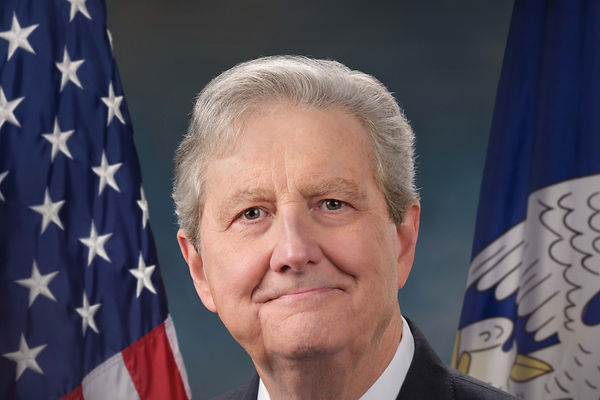

Gov. Jeff Landry said what too few officials will on Wednesday morning. "Americans are getting ripped off at the pump by the Democrats Renewable Fuel Standard," he wrote on X, "paying an extra 5¢ on gas and 20¢ on diesel at a minimum, probably a lot more!" Meanwhile, he added, America is shipping record amounts of fuel to Europe, "and they pay ZERO."
He is right, and he is leading on an issue Washington has let slide for years. Louisiana is lucky to have a governor willing to fight for the people who refine and haul this nation's fuel. American drivers and American refiners carry a federal mandate while European buyers take our fuel with no obligation attached. That is an America Last arrangement, and Louisiana sits at the center of it.
The Renewable Fuel Standard makes refiners and importers blend ethanol and biodiesel into the fuel supply or buy credits, called RINs, to cover the gap. For 2026, the total requirement stands at 15.50 percent of gasoline and diesel sales. At June's credit prices, the Institute for Energy Research put the gross compliance cost at roughly 37 cents for every gallon covered by the mandate, about twice the federal gas tax.
Drivers pay that bill. EPA said so itself this year: refiners recover the cost of RINs "through higher sales prices for the gasoline and diesel they produce," and the cost "is passed through from obligated parties to consumers of transportation fuel." The governor's figures sit well below IER's gross estimate, which makes his "at a minimum" conservative.
Now look at who escapes it. Under the program's regulations, at 40 CFR 80.1407, gasoline and diesel "exported for use outside the covered location" are left out of the volume used to calculate a refiner's obligation. A gallon of diesel sold in Lafayette carries the mandate. A gallon shipped to Rotterdam does not.
Those shipments are enormous. U.S. diesel exports hit a record 1.9 million barrels a day one week this summer, according to EIA data, driven largely by fuel shortages in Europe, as domestic stocks fell to their lowest level since 1996.
Louisiana is a pillar of that refining strength. The state's 15 refineries hold 16.5 percent of the nation's refining capacity, according to EIA's latest refinery survey, second only to Texas. Then Louisiana drivers, truckers and farmers among them, pay the domestic surcharge on the same product.
The White House has set the right goal. President Trump's January 2025 order on Unleashing American Energy commits the country to "ensuring that an abundant supply of reliable energy is readily accessible in every State and territory of the Nation." Energy dominance means American refiners compete at full strength and American families get the benefit first. The RFS works against both.
Few officials have fought for that goal longer than Landry. As attorney general, he led 13 states in suing over President Biden's 2021 pause on new federal oil and gas leasing, and won a nationwide preliminary injunction that forced lease sales to resume. The Fifth Circuit vacated that injunction in 2022 as insufficiently specific without ruling on the merits, but the fight put Louisiana on record for Gulf production.
As governor, he kept at it. When the Biden Department of Energy froze new LNG export approvals in 2024, Landry signed a proclamation declaring that Louisiana "opposes efforts to limit, delay, or ban the approval of new and existing liquefied natural gas export facilities," and an executive order directing state regulators to streamline oil and gas permitting. Louisiana sued, and a federal judge in Lake Charles halted the freeze that July. That is a governor who treats energy as a national strength.
The Biden administration made the mandate heavier for refiners like Louisiana's. Its EPA's June 2023 rule raised the total renewable fuel requirement each year, from 20.94 billion RINs in 2023 to 22.33 billion in 2025. A year earlier, in June 2022, it denied 69 small refinery exemption petitions covering 2016 through 2021, concluding that none showed hardship caused by the program.
Corn and soybean growers do benefit from the mandate. A Louisiana rice or cane farmer burning diesel mostly pays it.
Gov. Landry's call is plain: "Time to put American drivers FIRST." LPR backs it, and Louisiana's delegation should follow his lead. In our view, that starts with ending the arrangement he described, in which American drivers carry the mandate while fuel bound for Europe pays "ZERO." Congress wrote the RFS and can rewrite it, putting domestic and exported gallons on equal footing and setting a hard ceiling on what the program can cost drivers.
Landry did not wait for Washington to notice. He has fought for Louisiana's oil and gas workers since his years as attorney general, and he is fighting for American drivers again now. The delegation should carry his message to Washington before the 2027 obligations come due.
Image: Background photo by Chris Rycroft / CC BY 2.0, modified. Photo of Gov. Landry used with permission.